
Step 2: Come to Jesus | The Gospel of Jesus Christ
The Good Way Discipleship Course | Step 2 of 12
Knowing the Savior and Receiving New Life
The gospel of Jesus Christ is the foundation of the Christian life. Before we can understand how to follow Jesus faithfully, we must understand who he is, why he came, what he accomplished through his death and resurrection, and how we are called to respond to him.
In Step One, we explored Jesus’ Great Commission and his command to make disciples. We also established that discipleship begins with God’s grace rather than our own religious accomplishments. Now we come to the question beneath everything else: What does it actually mean to belong to Jesus Christ?
This question matters whether you are exploring Christianity for the first time or have attended church for many years. Religious knowledge, Christian traditions, and good intentions cannot replace the new life that God gives through his Son.
The Central Truth: God saves sinners through Jesus Christ, the eternal Son who became truly human, died for our sins, and rose again. We are called to repent and believe in him, receiving salvation by grace rather than earning it through our own works.
Do Not Skip This Section!
It can be surprisingly easy to spend years attending church, studying Scripture, serving others, and participating in Christian activities without carefully examining the very foundation of our faith: the gospel of Jesus Christ. Some assume they already understand it. Others become so focused on Christian living that they rarely return to the question of what it actually means to be saved.
Yet everything else in discipleship rests upon this foundation. Before we can understand how to follow Jesus, we must understand who he is, why we need salvation, what he accomplished through his death and resurrection, and what it means to genuinely repent and place our faith in him. Religious familiarity is not the same as saving faith!
Whether you are exploring Christianity, have recently believed, or have followed the Way for many years, please do not rush through this lesson. Examine the Scriptures carefully, consider your own understanding of the gospel, and be willing to address questions you may have overlooked. The gospel is not merely the first lesson of Christianity. It is the foundation upon which our entire life with Christ rests.
Begin With Scripture
Primary Reading: John 3:1–21 (WEBU)
Our principal passage records a remarkable conversation between Jesus and Nicodemus, a respected religious teacher. Nicodemus recognizes that God is at work through Jesus, but Jesus immediately directs him toward something more important than religious knowledge: the necessity of being born anew.
Read John 3:1–21 carefully before continuing. Pay attention to three questions:
- The need | What does Jesus tell Nicodemus is necessary to enter God’s Kingdom?
- The Savior | What does Jesus reveal about his identity and saving mission?
- The response | What does the passage teach about believing in the Son of God?
Companion Readings:
- Romans 3:21–26 | Paul explains humanity’s need for God’s righteousness and how sinners are justified through the redemption accomplished by Jesus Christ.
- Ephesians 2:1–10 | Paul describes our spiritual condition apart from Christ and shows that salvation comes through God’s mercy and grace, not our works.
Additional Reading: 1 Corinthians 15:1–8 | Paul summarizes the central events of the gospel: Christ’s death for sins, burial, bodily resurrection, and appearances to witnesses.
These passages belong together. John explains the necessity of new birth and faith in the Son, Romans explains our need for redemption, Ephesians establishes salvation by grace, and Corinthians identifies the saving events at the heart of the gospel.
Why We Need New Life in Christ
Nicodemus: Religious Knowledge Is Not Enough
John 3 begins by introducing Nicodemus, a Pharisee and ruler of the Jews. He belongs to a respected religious movement and carries responsibility among the Jewish people. He knows the Old Testament Scriptures and has devoted considerable attention to religious life.
Nicodemus approaches Jesus at night and acknowledges that his miraculous signs indicate that God is with him. His words are respectful, but Jesus immediately turns the conversation toward a deeper issue.
In John 3:3 (WEBU), Jesus teaches:
“Most certainly I tell you, unless one is born anew, he can’t see God’s Kingdom.”
The phrase born anew can also carry the meaning of being born again or from above. Jesus is describing a spiritual birth that cannot be produced through another physical birth or improved religious performance.
Nicodemus initially misunderstands the teaching because he thinks in terms of returning to his mother’s womb. Jesus explains that entrance into God’s Kingdom requires birth by water and the Spirit (John 3:5–8).
This is an important starting point for Christian discipleship. Nicodemus possesses knowledge, religious experience, and social standing, yet Jesus tells him that he needs something only God can give.
A person does not become a Christian simply by becoming more religious. We need new life from God.
What Does It Mean to Be Born Anew?
Jesus distinguishes physical birth from spiritual birth. Human parents give physical life, but the Holy Spirit gives the new life necessary for entrance into God’s Kingdom.
Jesus compares the Spirit’s work to the wind. We hear the wind and observe its effects without controlling where it comes from or where it goes. Likewise, the Spirit’s work is real and life-giving, even though it cannot be manufactured through human methods.
This teaching connects with God’s promises in the Old Testament. In Ezekiel 36:25–27, God promises to cleanse his people, give them a new heart, and place his Spirit within them. Jesus expects Nicodemus, a teacher of Israel, to recognize the significance of these promises.
Christians have interpreted the relationship between water, the Spirit, and baptism in John 3:5 differently. Some historic traditions understand the passage as directly referring to baptism and God’s regenerating work. Others emphasize the Old Testament imagery of spiritual cleansing and renewal while recognizing baptism as an important Christian practice.
These differences deserve careful study, but they should not obscure the central message: new birth comes through God’s gracious work by the Holy Spirit, not through human religious achievement.
Titus 3:3–7 reinforces this truth by connecting salvation with God’s mercy, regeneration, and renewal through the Holy Spirit. The Christian life begins with divine grace, not with our ability to make ourselves spiritually alive.
Why Humanity Needs a Savior
To understand why Jesus came, we must understand the problem of sin.
Scripture teaches that God is holy, righteous, loving, and just. He is the Creator of everything, and human beings were made to know him, honor him, and live according to his good purposes.
Sin is more than occasional wrongdoing or personal weakness. It includes rebellion against God, rejection of his authority, and failure to love and obey him as we should. Our sinful condition affects our thoughts, desires, relationships, and actions.
Romans 3:9–23 explains that both Jews and Gentiles stand under sin. No amount of religious status, personal accomplishment, or moral effort can establish our righteousness before God. His justice means sin cannot simply be ignored, while his mercy reveals his willingness to save.
This creates the central human problem addressed by the gospel: we cannot remove our guilt, overcome spiritual death, or reconcile ourselves to God through our own efforts. We need a Savior who can accomplish what we cannot.
Ephesians 2:1–3 describes people apart from Christ as spiritually dead in their trespasses and sins. That is a far more serious condition than simply needing better habits, stronger motivation, or additional religious instruction.
Yet the passage does not end in despair. It turns toward the extraordinary mercy of God, who acts to save those who cannot save themselves.
Who Is Jesus Christ?
Before learning how to respond to Jesus, we must understand who he is.
Christianity does not teach that Jesus was merely an unusually wise person, a prophet among many prophets, or an inspiring example of religious devotion. The New Testament presents him as the eternal Son of God who became truly human for our salvation.
One God: Father, Son, and Holy Spirit
The Christian faith confesses one God who eternally exists as Father, Son, and Holy Spirit.
This is the doctrine of the Trinity. Christians do not worship three gods, nor do we believe that God is one person merely appearing in three different forms. The Father, Son, and Holy Spirit are distinct divine persons, yet they are the one true God, sharing the same divine being.
We see these distinctions revealed throughout Scripture. At Jesus’ baptism in Matthew 3:13–17, the Son is baptized, the Spirit descends upon him, and the Father’s voice speaks from heaven. In John 3, Jesus describes the Spirit’s work of new birth and God’s love in sending the Son.
The Trinity is not a mystery Christians must fully comprehend before receiving salvation. It is the truth about God revealed through Scripture, forming the foundation of Christian worship and faith.
The Father sends the Son, the Son accomplishes our redemption, and the Holy Spirit gives new life and transforms believers. These works belong to the one God, not to competing divine beings.
Jesus Is Truly God and Truly Human
The Son of God did not begin to exist when Jesus was born in Bethlehem. He is eternal and shares the divine nature with the Father and the Holy Spirit.
John 1:1–18 teaches that the Word was with God, was God, and became flesh. The eternal Son entered human history without ceasing to be divine.
Jesus is therefore fully God and fully human, one person possessing both a true divine nature and a true human nature. He was born of the virgin Mary, experienced genuine human life, faced temptation without sinning, and willingly suffered death.
His humanity matters because he came to represent humanity and accomplish salvation through his obedient life and sacrificial death. His deity matters because he is the divine Savior whose person and work are sufficient to redeem sinners.
This is the historic Christian understanding of Jesus, affirmed in the Nicene Creed and the Definition of Chalcedon.
Who Jesus is explains why his life, death, and resurrection are sufficient for our salvation. We cannot separate the identity of Christ from the work he came to accomplish.
What Jesus Accomplished for Us
The Cross: Christ Died for Our Sins
As Jesus continues speaking with Nicodemus, he explains that the Son of Man must be lifted up so that those who believe in him may receive eternal life (John 3:14–15).
Jesus refers to an event recorded in Numbers 21:4–9. When the Israelites sinned against God and suffered judgment in the wilderness, God provided a means of deliverance through the bronze serpent raised by Moses. Those who looked in response to God’s provision lived.
Jesus uses that event to explain his own coming death. Just as the serpent was lifted up in the wilderness, the Son of Man would be lifted up through crucifixion. His death would become the means through which God provides salvation to sinners who believe in him.
Romans 3:21–26 explains this more fully. God reveals his righteousness through Jesus Christ, and sinners are justified freely by his grace through the redemption accomplished in Christ.
Justification means being declared righteous before God. This verdict rests upon Christ’s saving work rather than our moral achievements.
Paul also describes Jesus as the atoning sacrifice through which God demonstrates his righteousness. The cross therefore reveals both the seriousness of sin and the extraordinary mercy of God.
Jesus did not die merely to demonstrate kindness or inspire us to become better people. He died for our sins, accomplishing the redemption we could never secure for ourselves.
The Resurrection: Christ Is the Living Savior
The gospel does not end with Jesus’ death.
According to 1 Corinthians 15:1–8, Jesus was buried, rose bodily on the third day, and appeared to witnesses. His resurrection is an essential historical and theological foundation of Christianity.
Paul emphasizes that if Christ has not been raised, Christian faith is empty and sinners remain in their sins (1 Corinthians 15:12–19).
The resurrection confirms that Jesus is not a defeated teacher whose followers merely preserved his ideas. He is the living Lord who conquered death and now reigns with authority.
His resurrection also establishes the hope of future resurrection for those who belong to him. Christian salvation is not limited to a better experience in the present life. It includes the promised completion of God’s saving work when Christ returns.
This is why the gospel centers upon both the cross and the empty tomb.
Jesus died for our sins, rose again, and lives as the Savior and Lord of everyone who trusts in him.
God’s Love and the Gift of His Son
John 3:16 declares God’s extraordinary love for the world through the giving of his only born Son. The following verses explain that the Son came so that the world might be saved through him, while also warning that unbelief leaves a person under judgment.
God’s love does not make sin unimportant, and his justice does not make his saving mercy uncertain. Both are revealed in Jesus Christ.
John 3:19–21 describes humanity’s resistance to the light because evil works do not welcome exposure. The problem is therefore not merely a shortage of religious information. Sin also affects what we love and what we are willing to surrender.
Jesus calls people out of darkness and into the light. Coming to Christ means we no longer need to defend our sin, hide behind our religious reputation, or pretend to possess a righteousness we do not have.
We may come to the Savior who knows the truth about us and offers salvation through his grace.
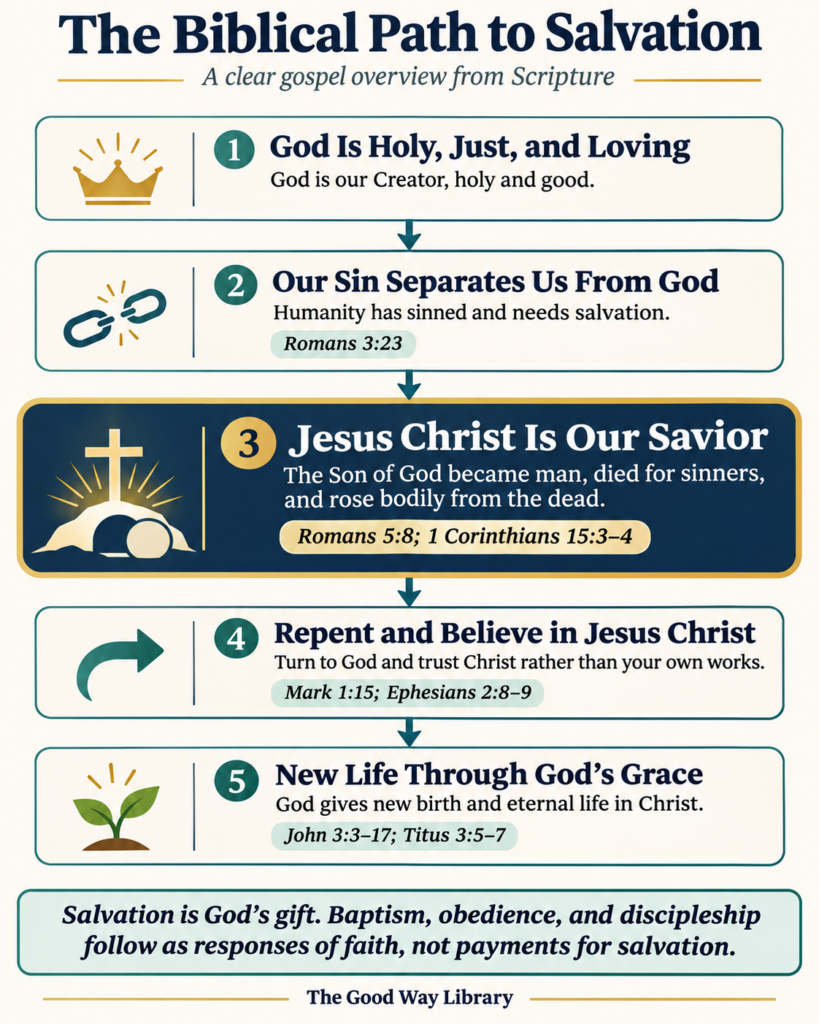
How Do We Respond to Jesus?
The gospel announces what God has accomplished through Christ. It also calls for a genuine response.
In Mark 1:15 (WEBU), Jesus commands:
“Repent, and believe in the Good News.”
These responses belong together. They are not religious achievements through which we purchase salvation, but the appropriate response to the Savior whom God has sent.
Repentance: Turning Toward God
Repentance involves a genuine change of mind and heart concerning God. It means recognizing our rebellion and turning toward God in humble submission to Jesus Christ.
Repentance is more than feeling embarrassed, regretting consequences, or temporarily improving outward behavior. It involves acknowledging that God is right and that we need his mercy. 2 Corinthians 7 is essential here in understanding true repentance.
Importantly, repentance does not mean achieving sinless perfection before coming to Jesus. We cannot cleanse ourselves sufficiently to become worthy of his salvation. Instead, we come to Christ honestly, confessing our need and seeking the grace that only he provides.
A repentant person may still have many weaknesses and struggles. The Christian life includes continued repentance as the Holy Spirit transforms us. What changes is the direction of our allegiance: we are turning toward Christ rather than defending rebellion against him.
Faith: Trusting Jesus Christ
Faith is more than agreeing that certain Christian claims are true.
Someone may believe that Jesus existed, know the events of his crucifixion, and understand Christian teaching without personally trusting him as Savior and Lord.
Saving faith means relying upon Jesus Christ and his saving work rather than depending upon our own righteousness. It includes receiving God’s testimony about his Son, trusting his promises, and entrusting ourselves to him.
John 3 repeatedly connects believing in the Son with receiving eternal life. The emphasis rests upon Jesus himself, not upon the strength of someone’s emotions or the perfection of their understanding.
We are not saved because our faith is unusually impressive. We are saved by God’s grace through faith in the sufficient Savior.
This also means Christianity is not merely an invitation to admire Jesus from a distance. He calls us to follow him, trust him, and live under his lordship.
Salvation Is God’s Gift
Ephesians 2:4–10 gives one of Scripture’s clearest explanations of how grace and spiritual transformation belong together.
Paul begins with God’s mercy. Even while people were spiritually dead in their sins, God acted to make believers alive with Christ. Salvation begins in God’s loving initiative.
Paul then explains that salvation is by grace through faith, not the result of human works. No one can boast that they earned acceptance before God.
Yet verse 10 teaches that believers are created in Christ Jesus for good works. Notice the order:
- God acts in grace | Salvation begins with God’s mercy and the saving work of Jesus Christ.
- We receive through faith | We trust Christ rather than our ability to earn righteousness.
- We live in newness of life | The Holy Spirit forms growing obedience and good works in those who belong to Jesus.
This is the foundation of the discipleship journey ahead. Good works do not create our salvation. They belong to the life God prepares for those whom he saves.
We do not work our way into Christ. Through faith, we receive his saving grace and begin learning to live from the life he gives.
What If You Are Not Sure You Believe?
Perhaps you have reached this point and realize that you know about Jesus but are uncertain whether you have personally trusted him.
You may have attended church for many years or participated in religious activities without understanding the gospel clearly. Or perhaps you are encountering Christian teaching for the first time and still have serious questions.
You do not need to pretend that you believe something you do not yet understand.
Jesus took Nicodemus’ questions seriously, even while challenging his assumptions and directing him toward the truth. Honest questions are not something to be ashamed of.
At the same time, the gospel calls for a personal response. Scripture does not present repentance and faith as matters that can be postponed indefinitely without consequence.
If you understand the gospel and recognize your need for Christ, you may turn to him in repentance and faith now. You do not need a special location, an elaborate ceremony, or perfectly chosen words before you can seek his mercy.
You can acknowledge your sin, confess your need for salvation, and place your trust in Jesus Christ.
A sincere prayer may express that response, but reciting a particular prayer does not automatically save someone. Salvation rests upon God’s grace through faith in Jesus, not upon the repetition of a formula.
If you remain uncertain, continue reading Scripture and speak honestly with your discipler or a trusted pastor. Do not let pressure from another person substitute for genuine understanding and faith.
Beginning Life With Christ
Baptism and the Christian Community
In Step One, we learned that Jesus commands his followers to make disciples, baptize them, and teach them to observe everything he commanded (Matthew 28:18–20).
The New Testament closely connects the proclamation of the gospel with baptism and participation in Christian fellowship. In Acts 2:37–47, those who receive Peter’s message are baptized and begin sharing life with the believers.
Christian traditions differ concerning baptism’s relationship to regeneration, its proper recipients, and its administration. These differences should be approached with seriousness and charity rather than allowing them to distract from the central message of salvation through Jesus Christ.
If you profess faith in Christ and have not been baptized, speak with a pastor or trusted church leader about the biblical meaning and practice of baptism. Likewise, seek a faithful local church where Scripture is taught, worship is practiced, and believers encourage one another.
The Good Way Library provides resources to support your Christian growth, but it cannot replace the life of Christ’s church.
What Is Already True for Those Who Belong to Christ?
The gospel is not simply an announcement that God might accept us someday if we become sufficiently faithful.
For genuine believers, Scripture teaches that God’s saving work has already established a new relationship with him.
Through Jesus Christ, believers receive forgiveness, reconciliation with God, new life, and the gift of the Holy Spirit. These blessings rest upon Christ’s completed saving work rather than a lifetime of religious achievement.
Nevertheless, Christians still grow in understanding, holiness, love, and obedience. We remain dependent upon God’s grace as we learn to follow Christ more faithfully.
We also await the future resurrection and complete transformation promised at Christ’s return.
This distinction will become central in Step Three. We will explore what it means to be united with Christ, forgiven, adopted into God’s family, and assured of his promises.
For now, remember the essential order: God saves through Jesus Christ, gives new life through the Holy Spirit, and then teaches his people to live according to that grace.
Christians Before Us: Confessing the Gospel
Christians have carefully explained and defended the identity of Jesus Christ throughout church history. The early church understood that the gospel would lose its meaning if Jesus were reduced to a created being, a mere human teacher, or someone who only appeared to be human.
At the Council of Nicaea in AD 325 and the Council of Constantinople in AD 381, Christian leaders clarified their confession of the Father, Son, and Holy Spirit. The Nicene-Constantinopolitan Creed affirms one God, the full deity of Jesus Christ, his incarnation, crucifixion, resurrection, and the Holy Spirit’s divine identity.
The Definition of Chalcedon in AD 451 further clarified the Christian confession that Jesus Christ is one person who is truly God and truly human.
These historic statements do not replace Scripture or possess equal authority with it. They help summarize the biblical faith Christians have confessed across generations and provide useful safeguards against misunderstandings about Jesus.
In the fourth century, Augustine of Hippo (354–430) experienced firsthand the struggle between knowing about God and personally surrendering to him. Although Augustine was highly educated and deeply interested in questions of truth, he spent years pursuing worldly ambitions and desires while resisting the Christian faith. Through the influence of his mother Monica, the preaching of Ambrose of Milan, and his growing understanding of Scripture, Augustine came to recognize his desperate need for God’s grace. In AD 386, while wrestling with his unwillingness to abandon his former way of life, he encountered the words of Romans 13:13–14 and experienced a decisive turning point in his conversion. He was baptized the following year. Augustine later described his spiritual journey in Confessions, recognizing that genuine transformation begins with God’s gracious work rather than human achievement. His story reminds us that understanding Christianity is not the same as coming to Christ. We must personally respond to the Savior in repentance and faith, trusting the grace that only God can provide (Ephesians 2:8–10).
For additional study, The Good Way Library offers a detailed explanation of the Nicene Creed in our Christian Resource Library.
Learning to Follow Jesus: The Starting Point
The gospel invites us into a living relationship with Jesus Christ, not merely a new set of religious activities. Through His death and resurrection, Jesus has accomplished the work of salvation, and those who trust in Him are called to live in the grace they have received.
Following Jesus therefore begins with faith in His saving work and continues through growing dependence upon Him. Prayer, Scripture reading, worship, and obedience are not ways to earn God’s love. They are expressions of the new life He gives to those who belong to Christ.
Grow in Your Relationship With Christ
As you begin following Jesus, remember that your relationship with Him rests upon His grace rather than your ability to maintain a perfect spiritual routine. God does not require you to demonstrate flawless obedience before you can approach Him in prayer or seek His guidance through Scripture.
Instead, learn to turn toward Christ throughout your ordinary day. Bring your concerns before Him, seek wisdom from His Word, and ask the Holy Spirit to help you understand and obey His commands. As you encounter difficulties or recognize areas of sin, respond with repentance and renewed trust in God’s promises.
Spiritual growth is not an attempt to persuade God to accept you. It is learning to live in the grace and new life already given through Jesus Christ.
Respond Honestly to the Gospel
If you are still exploring Christianity, you do not need to pretend that you have reached convictions you do not yet hold. Begin by reading the words of Jesus carefully, considering His claims, and asking God to help you understand the truth.
You may have questions about salvation, forgiveness, faith, or the resurrection. Bring those questions into your study of Scripture and discuss them openly with a trusted Christian or discipler. Honest questions are opportunities to examine what the Bible teaches rather than reasons to avoid learning about Christ.
As you consider the gospel, remember that Jesus calls people to repentance and faith. The appropriate response is not merely to admire His teaching, but to recognize your need for His saving grace and place your trust in Him.
Share the Good News With Humility and Love
The gospel also has an outward purpose. As we come to know Jesus Christ and understand His saving work, we become better prepared to explain His message to others. Jesus commands His followers to make disciples, baptizing them and teaching them to observe all that He has commanded (Matthew 28:18–20).
Think of someone who may be curious about Christianity, uncertain about who Jesus is, or struggling with questions about faith. Consider praying for that person and looking for an appropriate opportunity to listen, offer encouragement, or explain what Scripture teaches about Christ.
You do not need to have every answer or deliver a perfect presentation. Begin with the central truths of the gospel: humanity’s need for salvation, Jesus’ death and resurrection, and God’s gracious invitation to repent and believe. Speak truthfully, respect the other person’s freedom to respond, and remain willing to continue the conversation.
The goal is not to pressure someone toward a quick decision or measure success by an immediate response. Instead, seek to bear faithful witness to Jesus through both your words and your conduct.
Continue Following Jesus by Grace
The Christian life begins with God’s grace and continues through dependence upon that same grace. As you move through the remaining steps of the Good Way Discipleship Course, you will explore how your identity in Christ shapes your understanding of Scripture, prayer, holiness, fellowship, and service.
These lessons are not a ladder you must climb to earn a relationship with God. They are opportunities to understand more fully what Christ has accomplished and how His followers are called to live in response.
The mission of Jesus begins with receiving His saving grace and continues as we grow in faith, learn to obey His commands, and bear witness to His love. We follow Christ not to earn the life He gives, but because He is the source of that life.
For the Discipler: Walking Through This Step Together
This lesson introduces the gospel itself. Your role is to help the learner understand who Jesus is, why salvation is necessary, what Christ accomplished, and how Scripture calls people to respond. Keep the conversation centered on the biblical passages rather than trying to produce an emotional response or a rapid profession of faith.
Before You Meet | Read John 3:1–21, Romans 3:21–26, and Ephesians 2:1–10. Review the Good Way John 3 commentary, particularly the Walkthrough and Leading sections. Be prepared to explain the Trinity, Christ’s death and resurrection, repentance, faith, and grace in ordinary language.
During the Meeting | Begin by asking what the learner currently understands about the gospel. Read John 3 together and follow Nicodemus’ questions through the passage. Give the learner time to ask about sin, new birth, the person of Jesus, and salvation. Use the discussion questions below rather than preparing a separate lesson or sermon.
What to Watch For | Religious familiarity is not necessarily saving faith, but hesitation or uncertainty is not proof that someone has rejected Christ. Do not pressure the learner into repeating a conversion prayer or declare their spiritual condition based upon a single conversation. Keep the focus on understanding Scripture, repentance, faith, and Christ’s saving work.
Before Moving Forward | Invite the learner to explain the gospel in their own words and identify any unresolved questions. If they profess faith, encourage an appropriate conversation with a local pastor about baptism and church participation. If they remain uncertain, welcome continued honest study. Before Step Three, ask them to read Romans 6:1–14.
Discuss Together
Read John 3:1–21 again and work through these questions with your discipler. If you are studying alone, consider writing your responses.
- The need for new birth: Why does Jesus tell Nicodemus that he must be born anew, even though Nicodemus is already a respected religious teacher?
- The identity of Jesus: Why does it matter that Jesus Christ is truly God and truly human? How does his identity relate to his ability to save us?
- The problem of sin: What do Romans 3:21–26 and Ephesians 2:1–10 teach about humanity’s spiritual condition and our need for God’s grace?
- The death and resurrection of Christ: What did Jesus accomplish through the cross, and why is his bodily resurrection essential to the gospel?
- Repentance and faith: How would you explain the difference between knowing facts about Jesus and personally trusting him as Savior and Lord?
- Grace and obedience: Why does Ephesians 2 teach that salvation is not earned by works while also calling believers to live in good works?
- Your response: Where are you currently in your understanding of Jesus Christ? What questions, concerns, or next steps would you like to discuss concerning faith, baptism, or Christian fellowship?
Put It Into Practice
Explain the Gospel in Your Own Words
Read John 3:1–21 and Ephesians 2:1–10 again during the coming week. Then write a brief explanation of the gospel in approximately six sentences.
Try to explain who God is, why humanity needs salvation, who Jesus Christ is, what he accomplished through his death and resurrection, how we respond through repentance and faith, and why salvation is a gift of grace.
If you have a discipler, share your explanation during your next meeting. This is not a test of eloquence. It is an opportunity to clarify your understanding of the good news. You will need this to share it with others later in and after the course.
Bring Your Response Before Christ
Spend time considering what the gospel means for you personally.
If you are already a Christian, thank Jesus for his saving work and consider whether you have been trying to earn God’s acceptance through your own efforts. Ask him to deepen your trust in his grace.
If you are exploring Christianity, honestly bring your questions and concerns before God. Read the words of Jesus carefully, and consider what repentance and faith would mean in your own life.
If you are ready to trust Christ, respond to him sincerely rather than waiting for a particular emotional experience or a prescribed formula.
Take a Faithful Next Step
If you profess faith and have not discussed baptism, consider speaking with a trusted pastor or church leader. If you are not connected to a healthy local church, begin exploring where you might participate in Christian fellowship.
Also think of someone who might benefit from hearing about Jesus. Pray for that person and remain open to an appropriate opportunity for a respectful conversation about the gospel.
The purpose is not to secure a particular result, but to begin learning how Christ’s love shapes your concern for others.
If You Are Studying Alone
You can work through this lesson independently by reading the assigned Scripture passages, answering the discussion questions, and reflecting on the gospel’s meaning. The For the Discipler section may also help you recognize which subjects deserve additional attention.
However, questions concerning salvation, baptism, and Christian belief are worth discussing with mature believers. If possible, connect with a faithful local church where you can receive sound biblical teaching and develop Christian relationships.
Studying deeply alone is great, but it does not replace the church or personal Christian fellowship.
Suggested Prayer
Heavenly Father, thank you for your holiness, mercy, justice, and love. I recognize that I cannot save myself through religious knowledge, good works, or personal effort. Thank you for sending your Son, Jesus Christ, who became truly human, died for sinners, and rose again. Help me understand the truth of the gospel and respond to you with genuine repentance and faith. Where I am uncertain, give me wisdom and lead me into a clearer understanding of your Word. Where I have trusted in my own righteousness, teach me to depend upon your grace. Through your Holy Spirit, help me know Jesus more deeply, follow his teaching, and live in fellowship with him. Prepare me to love others and bear faithful witness to your saving goodness. In the name of Jesus Christ, amen.
Scripture to Remember
Ephesians 2:8 (WEBU)
“for by grace you have been saved through faith, and that not of yourselves; it is the gift of God,”
Read verse 9 as well to complete Paul’s sentence. Together, these verses remind us that salvation is God’s gracious gift rather than an accomplishment we can claim as our own.
As you memorize this passage, remember that Christian discipleship begins with the work of Christ, not with the effort to make ourselves acceptable to God.
Continue Studying With The Good Way Library
The following free resources will help you study the gospel more deeply. Read the biblical passages themselves before turning to the commentary for additional explanation.
- John 3 Commentary: New Birth and Eternal Life | Explore Jesus’ conversation with Nicodemus, the necessity of new birth, God’s saving love, and eternal life through faith in the Son. The Walkthrough and Interpretive Options sections are especially useful for understanding the language of water and Spirit.
- Romans 3 Commentary: God’s Righteousness Revealed | Study humanity’s universal need for salvation, justification through faith, and God’s righteousness revealed through the atoning work of Jesus Christ.
- Ephesians 2 Commentary: Grace, Peace, and One New Humanity | Examine how God brings spiritually dead sinners to life through Christ, saves them by grace through faith, and prepares them for faithful living.
- Nicene Creed Explained: Full Text, History, Trinity, and Scripture | Learn how historic Christians confessed the Trinity, the full deity of Jesus Christ, his incarnation, crucifixion, resurrection, and the Holy Spirit. This resource provides helpful theological background for understanding who our Savior is.
Before the Next Step
The gospel of Jesus Christ establishes everything that follows in Christian discipleship.
We have learned that humanity needs more than improved morality or additional religious knowledge. We need the grace of God, the saving work of Jesus Christ, and the new birth brought about by the Holy Spirit.
Jesus is the eternal Son of God who became truly human, died for our sins, and rose bodily from the dead. He calls us to repent and believe in him, receiving salvation by grace rather than earning it through our own works.
If you have not yet trusted Christ, take his invitation seriously and continue examining the Scriptures. If you already belong to him, remember that your new life rests upon what he has accomplished, not upon the success of your discipleship efforts. If you truly belong to him, you already have the King of Kings and the creator of the universe standing both behind and in front of you. What could ever truly stand against you?
Next Reading: Romans 6:1–14
In this passage, Paul explains that those who belong to Christ have been united with him in his death and resurrection. They are called to understand what is already true of them in Christ and to live accordingly.
Step Three: Alive in Christ will explore forgiveness, assurance of salvation, adoption into God’s family, union with Christ, and the new identity believers receive through his grace.
Before we can grow in Christian maturity, we must understand the life Christ has already given us. That is where our next step begins.
Partner With The Good Way Library
The Good Way Library is supported entirely by everyday readers like you. If this resource has helped you grow in your understanding of God’s Word and the Christian faith, please consider supporting this work with a one-time or monthly gift. Please also pray for our ministry and help us spread the word by sharing The Good Way Library with your church, friends, and family. Together, we can expand completely free access to faithful biblical teaching and help strengthen shared understanding and unity across the Christian church.